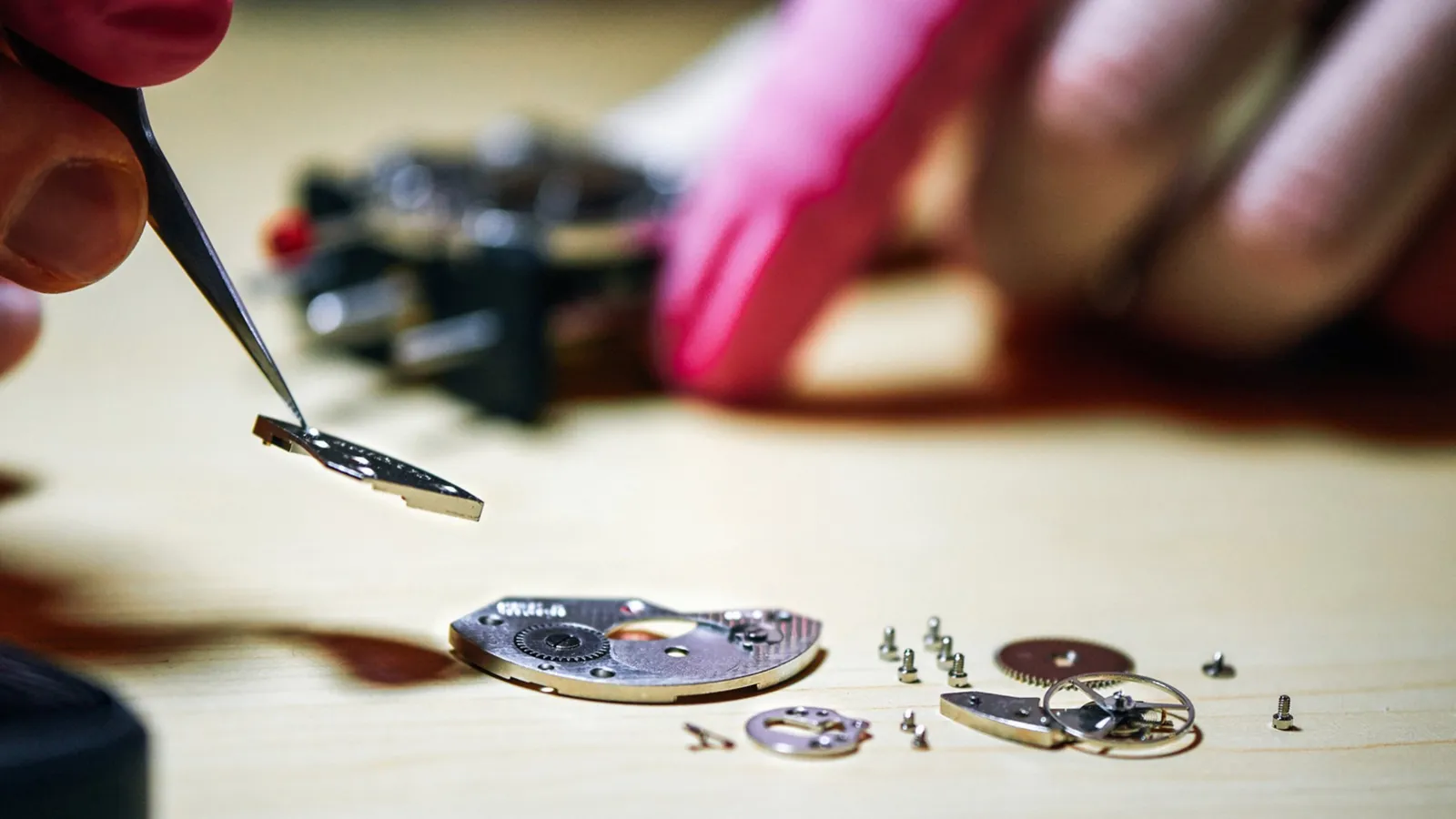

Tweezers lift a bridge above the parts of a disassembled movement, with screws, a wheel and the balance laid out on the bench

Horological Society of New York
Horology classes

Every HSNY class, explained

What you learn, and what you do at the bench.

About HSNY and its classes

The Horological Society of New York teaches watchmaking the way watchmakers learn it: at the bench, in groups of eight students at most, with a real mechanical movement in front of everyone and professional watchmakers at their side. Most students start with Horology 101, the most popular class: in two hours, you take the timekeeping system of a movement apart, from the balance to the barrel, put it back together, and understand how it works. From there, 102, 103 and 104 each go deeper into one system of the watch, and the half-day 101 to 103 takes you through a complete movement, for those who want to learn on the weekend.

The curriculum

How the classes fit together

How to choose your order

Everyone starts with Horology 101. After that, the three specialist classes can be taken in any order, each one going deeper into one system of the watch. The half-day Horology 101 to 103 brings the essentials together in a single session.

101 to 103 · half dayThe essentials in one sessionNo experience needed
About the half-day class

Prefer to learn on the weekend, or visiting New York? The four-hour Horology 101 to 103 covers the topics of 101, 102 and 103 in one sitting, built around a complete movement taken apart and reassembled at the bench, as in a service. It is also the class HSNY's Traveling Education programme, directed by TimeTechnics, takes to cities around the world.

Taught by professional watchmakersThe real difference: every class is led by a working watchmaker, sometimes two, who answers questions all the way through.
Your own bench and toolsEach student works at their own place, with a lamp, loupe, tweezers, screwdrivers and a movement holder.
A real mechanical movementNot a model or a kit: a working mechanical watch movement, the same kind watchmakers service.
Eight students at mostSmall groups keep the experience seamless and give everyone real access to the watchmaker. Each step is shown on screen, then done at the bench.
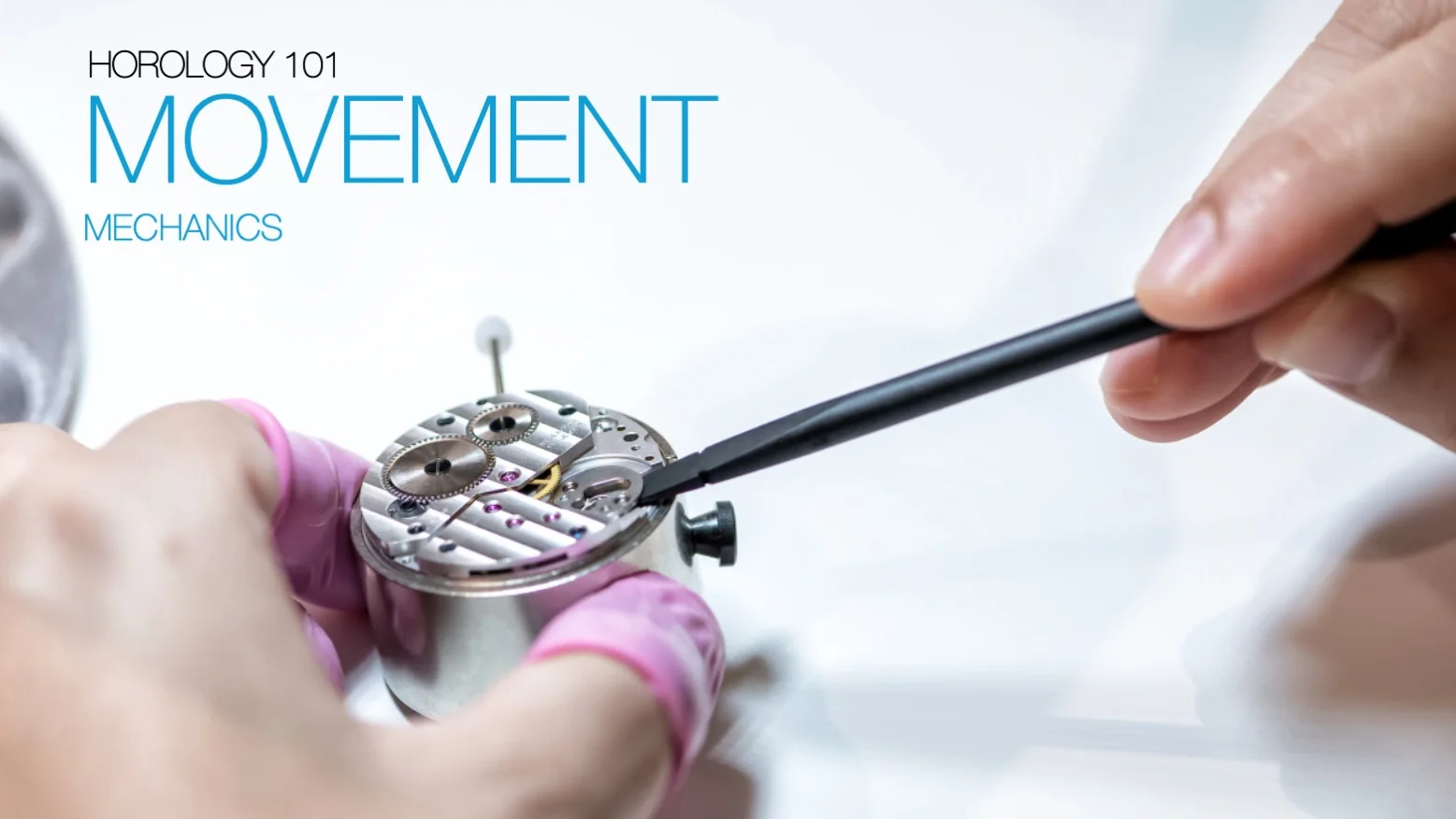
Horology 101, Movement Mechanics: fingers in pink finger cots steady a movement holder while a pegwood points into a hand-wound movement

Horology 101 · Movement Mechanics

The first class, the most popular, and the foundation for all the others. A hands-on class on the timekeeping system: you take it apart and put it back together yourself, from the balance to the barrel, and learn the tools that go with it.

Length
2 hoursOne evening session
Prior knowledge
None needed
Level
Beginner
Leads to
102, 103 and 104

What it covers

  • The timekeeping system of a mechanical watch, from the barrel that stores the energy to the balance that keeps time
  • The role of each part along the way: barrel, gear train, escapement and balance, and what they are called
  • The watchmaker's tools and how to use them properly: loupe, tweezers, screwdrivers and movement holder
  • How a watchmaker handles parts: finger cots, a clean bench and a steady hand

At the bench

You do not take the whole movement apart: you focus on its timekeeping system. Part by part, you disassemble it from the balance to the barrel, then reassemble it, guided step by step on screen and by the watchmaker beside you.

Key takeaways

  • A clear picture of what happens inside the watch on your wrist
  • How the watchmaker's tools work, and why each one is used
  • The words to talk about movements with collectors and watchmakers
  • The prerequisite for Horology 102, 103 and 104

Good for: complete beginners, collectors who have never opened a movement, and anyone curious about how watches work.
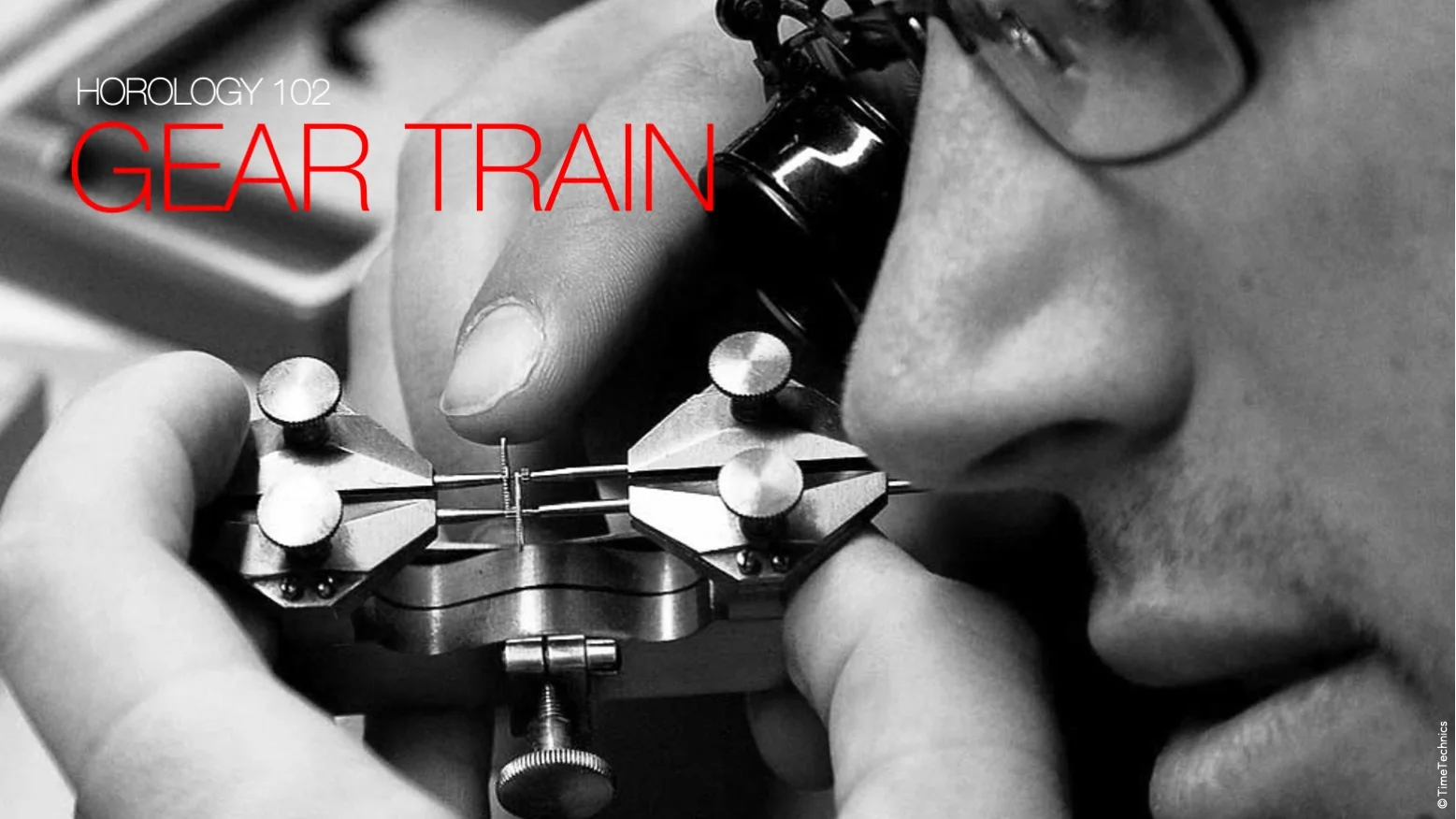
Horology 102, Gear Train: a watchmaker with a loupe checks a wheel and pinion held in a depthing tool

Horology 102 · Gear Train

An in-depth look at the gear train, the chain of wheels that carries the power of the mainspring through the movement and turns the hands.

Length
2 hoursOne evening session
Prior knowledge
Horology 101
Level
Intermediate
Focus
Terminology, function and theory

What it covers

  • The vocabulary of the gear train: barrel, centre wheel, third and fourth wheels, escape wheel, and the pinions that drive them
  • How the train carries energy from the mainspring to the escapement, and turns the hands at the right speed
  • The mathematics that determine the beat rate of a watch, worked out from the wheels and pinions
  • The jewels: why synthetic rubies serve as bearings for the wheels, and why setting them correctly matters for the gear train

At the bench

You work on the gear train of a mechanical movement, so the theory you have just seen on screen becomes something you hold in your tweezers.

Key takeaways

  • The ability to follow the power through a movement, from barrel to escape wheel
  • An understanding of how a watch's beat rate is set by its wheels
  • An understanding of the role of jewels: how synthetic rubies reduce friction and wear, and keep the gear train running true

Good for: students who have taken 101 and want the theory behind what they saw, and collectors who like to compare calibres.

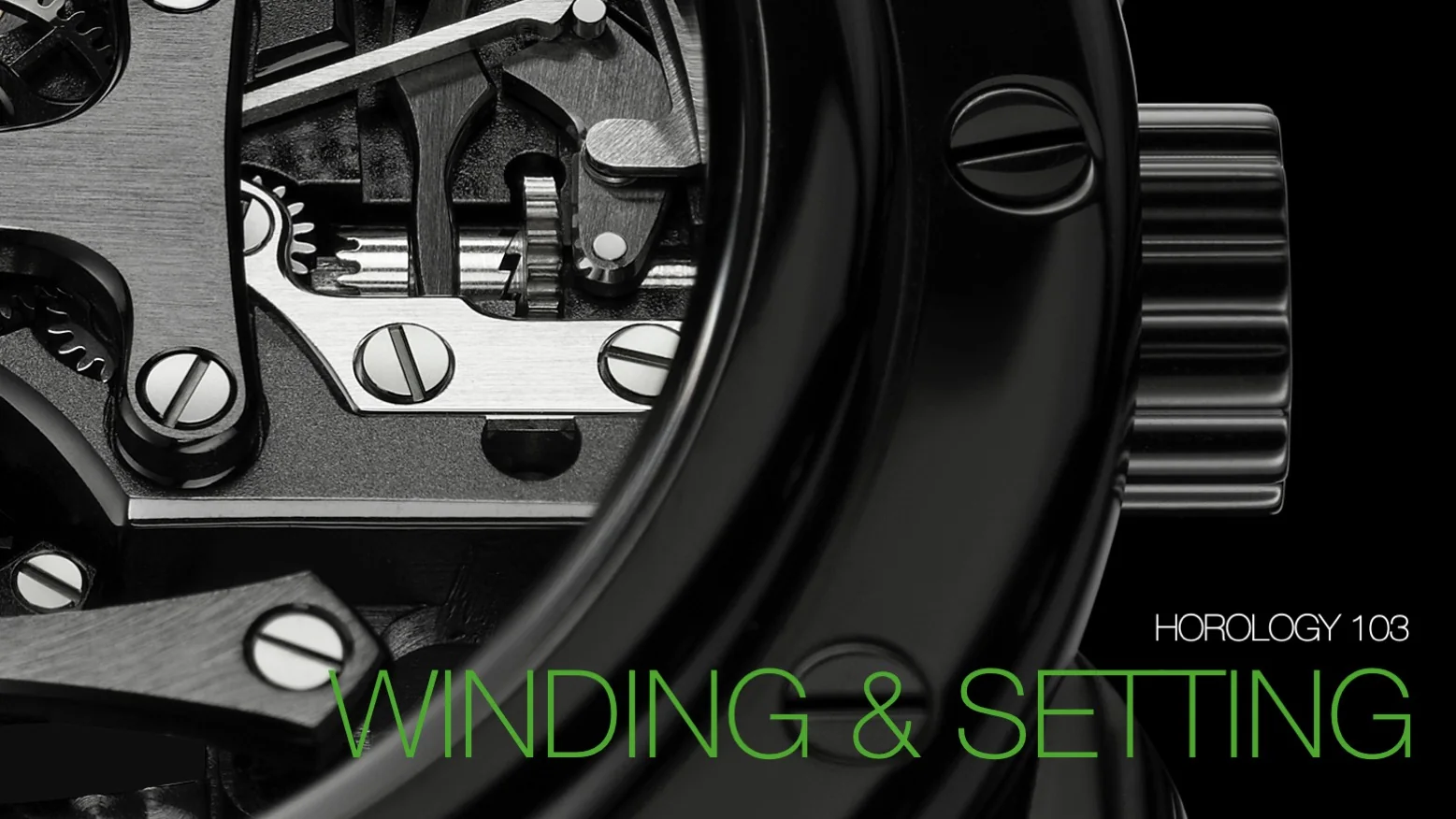
Horology 103, Winding and Setting: close-up of the winding stem, clutch and setting lever inside a watch case beside the crown
Photo: Manufacture Royale

Horology 103 · Winding & Setting Works

Everything that happens when you turn, pull or push the crown: how the watch is wound, and how the hands are set.

Length
2 hoursOne evening session
Prior knowledge
Horology 101
Level
Intermediate
Focus
Function and adjustment

What it covers

  • The parts that link the crown to the movement: the winding stem, the clutch and the winding pinion
  • How winding reaches the mainspring, through the crown wheel, the ratchet wheel and its click
  • How the setting mechanism engages the hands when the crown is pulled out, and why it has distinct positions
  • How these mechanisms function, and how a watchmaker adjusts them

At the bench

You work on the winding and setting works of a mechanical movement, taking the mechanism apart and putting it back so that the crown winds and sets again.

Key takeaways

  • What really happens inside the watch each time you use the crown
  • Why the crown has different positions, and how to use them with care
  • The ability to recognise the winding and setting parts in other movements

Good for: anyone who winds and sets their own watches, and collectors of hand-wound pieces.

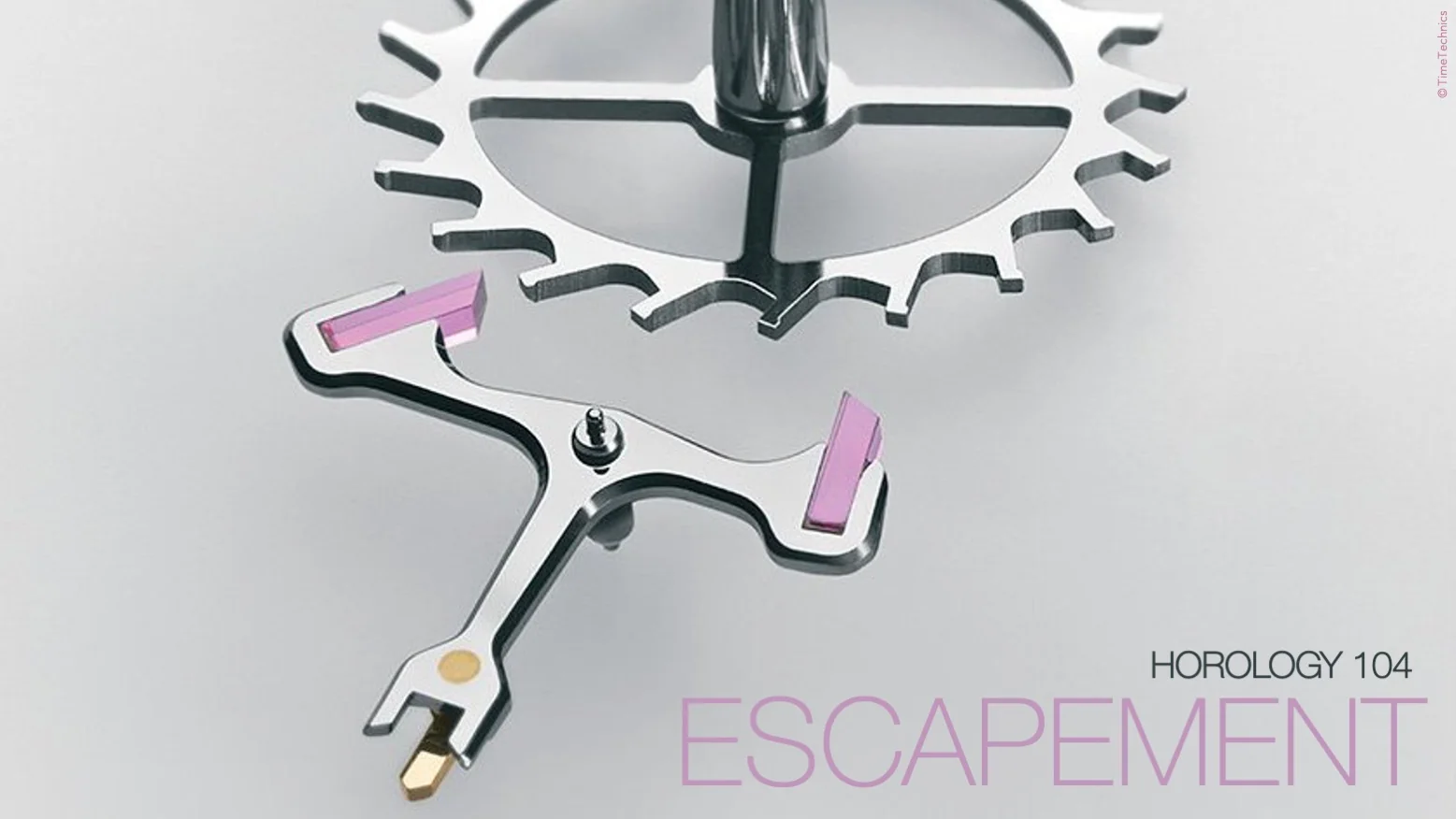
Horology 104, Escapement: a Swiss lever escapement, the escape wheel above a pallet fork with its ruby pallet stones

Horology 104 · Escapement

The heart of the watch: what makes a movement tick, how the lever escapement releases the power in small, equal steps, and how escapements have evolved over the centuries.

Length
2 hoursOne evening session
Prior knowledge
Horology 101
Level
Advanced
Teaching aids
Oversized models and a real movement

What it covers

  • The role of the escapement, between the gear train and the balance
  • A historical overview of past escapements, from the verge to the escapements that came before the Swiss lever
  • The Swiss lever escapement in detail: escape wheel, pallet fork and its pallet stones, balance and roller with its impulse pin
  • What happens at each swing of the balance: unlocking, impulse, drop and locking
  • The same sequence shown on oversized instructional models, then found again in a real movement

At the bench

You study the escapement first on oversized models, where every movement is easy to see, then on the escapement of a real mechanical movement.

Key takeaways

  • The answer to the question every watch lover asks: where does the ticking come from?
  • An understanding of the part of the movement that sets its rhythm
  • An understanding of the kinematics of the escapement, the heart of the watch, which is what makes everyone truly understand how a mechanical watch works
  • A new way of listening to your own watch

Good for: students who have taken 101 and want to understand the heart of the watch.

See our escapement animation in Learn →
Horology 101 to 103, Traveling Education: a portable watchmaking bench with tools, movement holder and dust cover, set up on a wooden table
Photo: Zach Piña

Horology 101 to 103 · The half-day class

The topics of 101, 102 and 103 in a single four-hour session, built as one seamless experience: like a watchmaker during a service, you take a complete movement apart and reassemble it at the bench.

Length
4 hoursOne half-day session
Prior knowledge
None needed
Level
Beginner
Where
New York and on tourTraveling Education

What it covers

  • The three topics of 101, 102 and 103: the timekeeping system, the gear train, and the winding and setting works
  • The order a watchmaker follows to take a complete movement apart and put it back together, as in a service
  • How to use the watchmaker's tools
  • More continuous time at the bench, and less theory than the 102 and 103 evening classes
  • A longer, more immersive session: four hours on an entire movement makes it a challenging, and very rewarding, class

At the bench

You take a complete mechanical movement apart and reassemble it, system by system, until it runs again. On tour, each student works on a hand-wound ETA 6497.

Key takeaways

  • A complete foundation in watch mechanics in a single sitting
  • The experience of having been the watchmaker for an afternoon
  • A real feel for the precision and patience behind every watch

Good for: those who want to learn on the weekend, beginners ready for a longer and more challenging session, visitors to New York, and the cities that Traveling Education visits.

Host this class in your city →

At a glance

Compare the classes

ClassLengthPrior knowledgeFocusAt the bench
101 · Movement Mechanics2 hoursNoneThe timekeeping system, the toolsTake the timekeeping system apart and reassemble it, balance to barrel
102 · Gear Train2 hours101Gear train theory, beat rateWork on the gear train
103 · Winding & Setting2 hours101Keyless works, function and adjustmentWork on the winding and setting works
104 · Escapement2 hours101The lever escapement, history of escapementsOversized models, then a real escapement
101 to 103 · Half day4 hoursNoneThe topics of 101, 102 and 103, hands-onA complete movement, apart and back together, as in a service

Evening classes take place at HSNY in Manhattan. The 101 to 103 runs in New York and in the cities visited by Traveling Education. Classes are taught in English.

For your own group

Booking a private class? The same programme, for your guests alone

How private classes compare

TimeTechnics private classes follow the same progression, taught by the same kind of professional watchmaker, for 2 to 8 guests at your home, office, club or boutique, in English or French. Here is what each format includes.

Horology 101 · 2 hoursFirst steps

The content of Horology 101: how the movement works, the tools, and the timekeeping system assembled by each guest.

Horology 101-102 · 3 hoursGoing further

Everything in 101, then the gear train: how the power travels through the wheels to the hands, with more time at the bench.

Horology 101-103 · 4 hoursBe the watchmaker

The full experience: 101 and 102, then the winding and setting works, all the way to reassembling a complete movement.